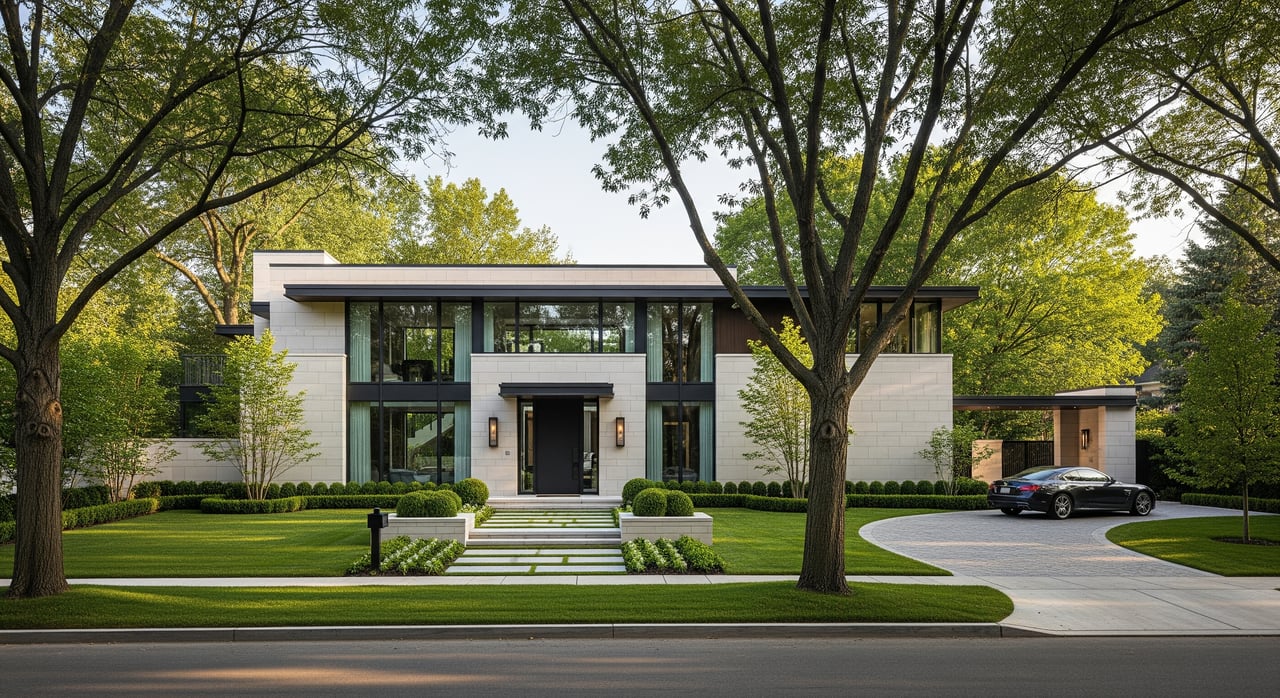
Thinking about leaving the city and torn between the North Shore and the West Suburbs? You are not alone. Each corridor offers a distinct rhythm, commute profile, and day-to-day lifestyle. In this guide, you’ll get a clear, side-by-side look at the tradeoffs so you can align your routine, budget, and wish list with the right fit. Let’s dive in.
North Shore vs West: Overview
North Shore at a glance
The North Shore generally includes lakefront and near-lake communities north of Chicago, such as Evanston, Wilmette, Kenilworth, Winnetka, Glencoe, Highland Park, Highwood, Lake Forest, Northbrook, and parts of Northfield. You’ll find tree-lined streets, notable historic architecture, and direct access to Lake Michigan. Geography and zoning often preserve a single-family character, especially near the lake.
West suburbs at a glance
The West Suburbs stretch along the I-290, I-88, I-294, and I-355 corridors. Typical examples include Oak Park, River Forest, Elmhurst, Wheaton, Downers Grove, Naperville, and Aurora. These towns trade the lakefront for rivers, forest preserves, and an extensive trail network. You’ll see a wide variety of housing, from historic inner-ring blocks to newer master-planned communities farther west.
Commute and transit
Rail options you’ll use
- North Shore: Primarily Metra’s Union Pacific North (UP-N). Evanston also connects to the CTA Purple Line, which links to the Red Line at Howard.
- West Suburbs: Metra’s BNSF and Union Pacific West (UP-W) lines serve much of the corridor. Oak Park’s CTA Green Line terminates at Harlem/Lake.
Typical train times
- Inner North Shore (Evanston, Wilmette): About 20 to 35 minutes to downtown on express runs. Local trains can take longer.
- Outer North Shore (Highland Park, Lake Forest): About 45 to 70 minutes depending on distance and stops.
- Inner West (Oak Park, River Forest): Often 15 to 30 minutes, with many homes near stations.
- Outer West (Elmhurst to Naperville to Aurora): About 30 to 60+ minutes; Naperville and Aurora riders often see 40 to 60 minutes.
Driving realities
- Inner-ring suburbs: Often 20 to 45 minutes in moderate traffic.
- Outer-ring or rush-hour trips: Commonly 45 to 90+ minutes, with variability from weather, construction, and incidents.
- Common routes: North Shore drivers use I-94 and local arterials. West Suburb drivers use I-290, I-88, I-355, and I-294.
Train frequency and schedules
Metra is peak-focused, with more inbound morning and outbound evening trains. Off-peak and reverse-commute service is typically lighter. Busiest lines tend to run more frequently, and both corridors offer peak-hour express options on certain trains. CTA provides frequent all-day service in inner suburbs like Evanston and Oak Park.
Station parking and fares
Many suburban Metra stations offer permit and daily park-and-ride options, with availability and pricing that vary by town and tend to rise closer to the city. Metra fares are zone-based and increase with distance. CTA fares are flat per ride and compatible with contactless payments. Always verify local on-street rules and permit requirements at the municipal level.
Housing and neighborhoods
North Shore homes
Lakefront towns such as Winnetka, Glencoe, and Lake Forest feature larger lots, historic estates, and architecturally notable homes. Inner North Shore communities like Evanston and parts of Wilmette add a mix of single-family homes, vintage multi-unit buildings, and condominiums near walkable downtown nodes. Expect older construction, mature trees, and, in some areas, local preservation guidelines.
West Suburb homes
Inner-ring towns like Oak Park and River Forest offer historic homes, bungalows, and dense, walkable blocks. Middle-ring communities such as Elmhurst and Downers Grove include mid-century ranches, split-levels, and later infill. Farther west, Naperville and Aurora present newer subdivisions, townhome communities, and master-planned neighborhoods. Driveways and garages are typically standard, especially in newer developments.
Price and affordability
- North Shore: Often higher median sale prices overall, particularly in lake-adjacent communities and older inner villages.
- West Suburbs: A broader range of prices and home types. Inner west can be competitive due to proximity and walkability, while many outer west communities offer variety across a wide budget spectrum.
Prices change quickly. Review current market data for specific towns when you are ready to narrow your search.
Lifestyle and outdoors
Lake access on the North Shore
If the lake is your must-have, the North Shore delivers. Many towns maintain public beaches, lakefront parks, and marinas or yacht clubs. Policies vary by municipality, including seasonal fees, resident vs nonresident rules, and parking guidelines. Lakefront programming, concerts, and community events are common throughout summer.
Trails and preserves out west
The West Suburbs shine with forest preserves, river corridors, and multiuse trails such as the Prairie Path, Great Western Trail, and routes along the DuPage and Fox Rivers. Many towns feature riverfront downtowns and extensive park systems. These corridors are popular for biking, running, and family recreation throughout much of the year.
Seasonal notes
Both corridors share Chicago-area winters. Shoreline parks can feel windier and colder, and beaches are largely seasonal. Trails and preserves remain attractive year-round as conditions allow.
Everyday conveniences
Downtowns and shopping
- North Shore: A network of walkable business districts with boutiques, dining, and café culture often near transit nodes. Evanston’s core and village centers in Wilmette and Winnetka are common examples.
- West Suburbs: Historic, walkable downtowns in places like Oak Park and Naperville complement larger retail clusters and regional centers found in many west towns.
Schools and education
Both corridors include multiple well-known districts. On the North Shore, communities may be served by districts such as those feeding New Trier Township High School and Evanston/Skokie. In the West Suburbs, districts include Naperville Community Unit School District 203, Oak Park and River Forest High School, and others. Boundaries vary by block. Review district websites and the Illinois Report Card for current metrics and programs.
Health care access
You’ll find major health systems and full-service hospitals in both corridors, including facilities in Evanston and across DuPage and surrounding counties. Many suburbs are within a 20 to 40 minute drive of multiple hospital systems and outpatient centers. Check local listings for the closest facilities to your target neighborhood.
Taxes and ownership costs
Property taxes vary by county and municipality. Cook, DuPage, Lake, and Will counties each apply different effective rates and levies. Some lakefront towns have beach passes, resident parking permits, and village-specific fees. West Suburbs may have HOA rules in newer communities. Always review a recent tax bill for comparable homes and verify village permits, parking, and recreational fees.
Match your routine
If you commute downtown often
- Consider inner North Shore towns like Evanston or Wilmette for combined Metra and CTA access, or inner West Suburbs like Oak Park for fast CTA and Metra connections.
- Look for walk-to-station locations if you value convenience and fewer transfers.
If you want newer homes and space
- Outer West Suburbs such as Naperville and Aurora offer a wide range of newer single-family homes and townhomes, often with larger lots and planned neighborhoods.
- Outer North Shore communities and estate areas also offer larger lots, though lake proximity often adds a premium.
If water or trails are your priority
- Choose the North Shore for direct Lake Michigan access, beaches, and marinas.
- Choose the West Suburbs for extensive trail systems, forest preserves, and riverfront amenities.
If you prefer walkable charm
- Inner North Shore and inner West communities tend to have the most walkable downtowns, boutique retail, and café clusters.
How Heidi Picard Properties helps
You deserve a move that fits your whole life, not just your commute. With a concierge-level, matchmaking approach and deep expertise from Lake Michigan’s shore to Chicagoland’s luxury corridors, you get tailored guidance, careful market analysis, and seamless tours across both regions. Whether you are focused on a lakefront lifestyle, a newer home with room to grow, or a short train ride to the Loop, we help you compare options side by side and negotiate with confidence.
Planning a sale or purchase in the next 6 to 12 months? Let’s align your timeline, preview on- and off-market listings, and map commute and lifestyle tradeoffs before you choose your neighborhood. Ready to talk next steps? Get a Free Home Valuation & Consultation with Heidi Picard Properties.
FAQs
What counts as Chicago’s North Shore?
- Generally, lakefront or near-lake suburbs north of the city, including Evanston, Wilmette, Kenilworth, Winnetka, Glencoe, Highland Park, Highwood, Lake Forest, Northbrook, and parts of Northfield.
Which West Suburbs have fast transit to the Loop?
- Inner-ring towns like Oak Park and River Forest often have short CTA and Metra rides, while Elmhurst, Downers Grove, and Wheaton have frequent Metra service on westbound lines.
How long is the train from Naperville or Aurora?
- Typical Metra rides are about 40 to 60 minutes, depending on the train and time of day.
Can I walk to the beach on the North Shore?
- Many North Shore communities provide public beach access and lakefront parks, though fees, parking, and resident policies vary by town.
Are property taxes very different by suburb?
- Yes. Effective rates and levies vary by county and municipality. Always review recent tax bills for comparable homes and confirm village fees and permits.
Where can I find trail access in the West Suburbs?
- Popular options include the Illinois Prairie Path, Great Western Trail, and corridors along the DuPage and Fox Rivers, supported by extensive forest preserves.