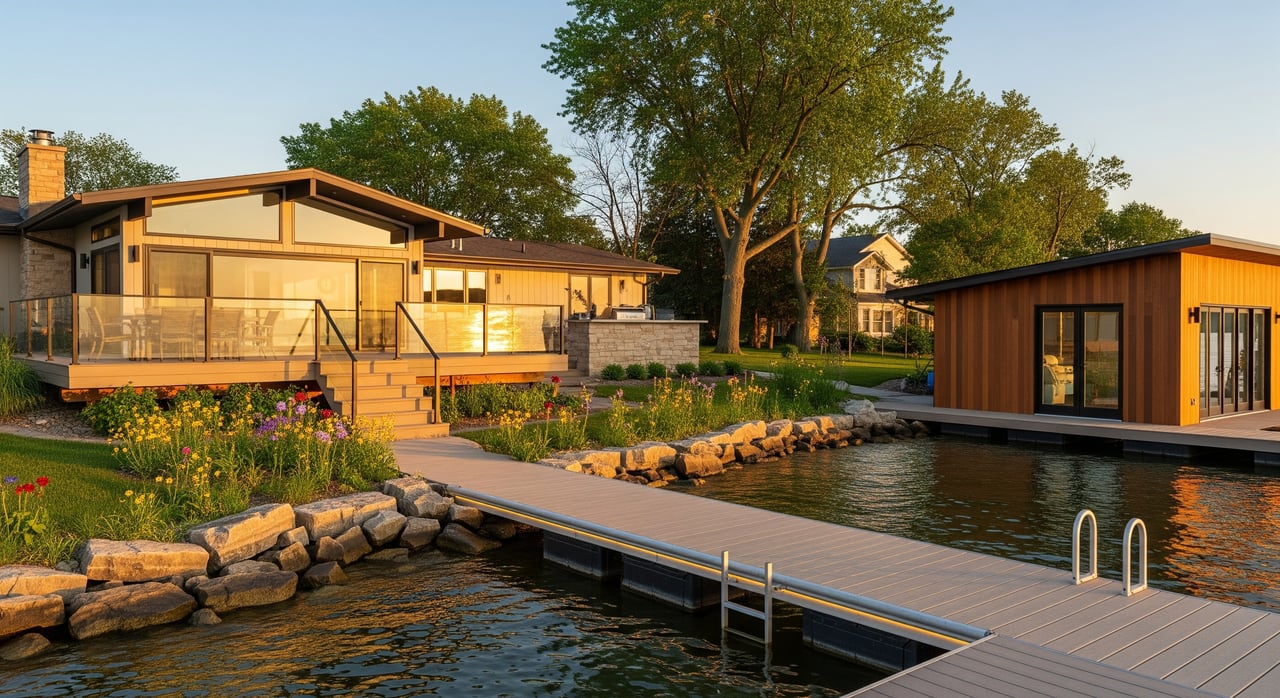
Thinking about selling your LaGrange County lake home and wondering which projects will make the biggest splash with buyers? You’re not alone. Lake buyers want easy water access, low-maintenance finishes, and great views. In this guide, you’ll learn the most valuable upgrades for Indiana inland-lake properties, how to time them, and what to handle before you list. Let’s dive in.
What lake buyers want in LaGrange
Lake buyers in LaGrange County compare shoreline utility, view corridors, and maintenance needs across nearby properties. They typically prioritize:
- Reliable, easy water access with a solid dock, lift, and safe shoreline entry.
- Low-maintenance exterior materials that hold up to sun, humidity, and freeze-thaw cycles.
- Unobstructed views and bright interiors with large windows and smooth indoor-outdoor flow.
- Sound systems that protect water quality, including septic and shoreline stability.
- Outdoor living and storage for boats and gear.
If you plan to list between spring and fall, finishing exterior improvements before peak season helps buyers see the full benefit.
Durable exterior upgrades that show
The lakeside environment can be tough on materials. Choosing durable, low-maintenance finishes reduces buyer concerns and supports stronger offers.
Siding and roofing
- Fiber-cement siding resists rot and insects and holds paint well, which helps your exterior look crisp through the seasons.
- Engineered wood siding can perform well with proper moisture management and finish.
- Vinyl siding can be cost-effective. Quality materials and correct installation are key to longevity.
- For trim and fasteners, rot-resistant or composite trim with stainless-steel or hot-dipped galvanized fasteners limits corrosion.
- Metal roofing and high-quality architectural asphalt shingles handle wind, shed snow and ice, and are popular in lake settings. Metal roofs often signal long-term durability to buyers.
Decking and railings
- Composite or PVC decking is a strong pick for low maintenance, moisture resistance, and UV stability.
- Pressure-treated lumber remains common for budget reasons but needs ongoing care; use coated or stainless fasteners.
- Tropical hardwoods, such as Ipe, are very durable but higher cost and need specialized installation.
- Powder-coated aluminum or stainless cable railings protect the view to the water, which buyers value.
- Design for function and sightlines: wide, shallow stairs, multi-level decks, and integrated seating maximize enjoyment and safety.
Windows and doors
- Double- or triple-pane windows with low-E coatings and insulated frames improve comfort and energy performance.
- Fiberglass or vinyl-clad wood frames offer durability with low maintenance.
- Large picture windows and wall systems increase perceived value by expanding the view.
- Sliding or folding doors create an easy indoor-outdoor connection for gatherings.
- Use corrosion-resistant hardware suited for humid, near-water conditions.
Docks that sell
The dock is often the deciding factor for lake buyers. Upgrades that make water access easier and safer deliver outsized impact.
Dock types and materials
- Fixed docks work well where water is consistently deep and the shoreline is protected. They require robust pilings and design that accounts for ice.
- Floating docks adjust to changing water levels and are often simpler to remove seasonally.
- Aluminum frames are lightweight, corrosion-resistant, and long-lived.
- Composite or polyethylene deck surfaces add traction and reduce maintenance.
- Pressure-treated wood is common but needs regular care and is more vulnerable to seasonal wear.
- Use marine-grade stainless or hot-dipped galvanized hardware for longevity.
High-value dock features
- A boat lift, electric or manual, makes boating easier and protects your hull. It is a visible amenity that buyers recognize.
- Covered slips or canopies help with storage and sun protection.
- Integrated lighting, benches, ladders, and storage boxes improve daily use.
- Safe, code-compliant shore access with solid steps, gangways, and tie-offs matters to buyers and inspectors alike.
Maintenance buyers notice
- Seasonal removal and installation, ice damage, and repair needs can be red flags.
- Lower-maintenance materials ease concerns about long-term costs.
- Organized documentation of maintenance and any professional inspections helps buyers feel confident.
Shoreline landscaping and erosion control
A healthy shoreline looks great and reassures buyers about erosion control and water quality. Visible erosion or turf right to the waterline raises questions.
Natural buffers and bioengineering
- Start with native plant buffers using grasses, sedges, rushes, shrubs, and trees to reduce runoff and stabilize banks.
- Combine softer methods, such as live stakes, brush layering, or coir logs, with plantings where gentle stabilization is needed.
- In higher-energy areas, riprap can work when carefully designed and often paired with vegetation to soften the look.
- Many buyers appreciate the balance of access, views, and habitat found in “living shoreline” approaches.
Permeable surfaces and stormwater
- Replace or reduce impermeable surfaces near the water. Permeable pavers, gravel, or porous patios help manage runoff.
- Use rain gardens, downspout dispersal, and vegetated swales upslope to intercept and filter stormwater.
- Keep turf away from the water’s edge. Create a narrow, mown path instead of a full grass-to-shore lawn.
Septic systems and documentation
- A properly functioning septic system is essential for lake water quality and a common buyer concern.
- Before listing, schedule a septic inspection, pump if due, and gather repair and service records.
- Check LaGrange County Health Department requirements for on-site sewage system rules, inspections, and disclosure.
Permits and timing in LaGrange County
Many shoreline and in-water projects need review. Starting early helps you avoid delays and sequence work within seasonal windows.
Who to contact
- LaGrange County Building and Zoning for structures, docks, and site work approvals.
- LaGrange County Health Department for septic inspections and permits.
- Indiana Department of Natural Resources for lake and river use, including docks and aquatic plant guidance.
- Indiana Department of Environmental Management, and in some cases the U.S. Army Corps of Engineers, for projects affecting regulated waters or wetlands.
- Your lake association or HOA for any rules on lifts, slips, vegetation, and aesthetics.
Document permits, plans, and inspections. Buyers and appraisers appreciate organized records.
Project timing tips
- Spring through early fall is best for exterior and shoreline work in Indiana.
- Some shoreline projects have seasonal restrictions related to wildlife or water levels.
- Build in time for drawings, permit reviews, and contractor scheduling.
- Plan dock removal and reinstallation around ice and drawdown cycles.
Budget and ROI: where to focus first
Every shoreline is unique. In general, start with safety and function, then enhance the lifestyle moments buyers value.
Prioritize for impact
- Fix safety issues and essential systems first, such as an unsafe dock, failing bulkhead, or septic repairs.
- Upgrade docks and add a lift if your shoreline supports it. These features increase daily usability and buyer appeal.
- Refresh or rebuild decks with composite surfaces and view-friendly railings.
- Improve views and natural light with efficient, larger-format windows and patio doors.
- Stabilize the shoreline and install native landscaping to reduce erosion and improve curb appeal.
A smart sequence removes buyer objections and highlights the waterfront experience.
Cost and timeline snapshots
Dock projects vary widely with lake conditions, size, materials, and permitting. Floating systems with aluminum frames and composite decking are common low-maintenance choices.
Composite decking and aluminum or cable railings range from modest to significant investments depending on scope, usually completed in days to weeks.
Shoreline plantings and simple bioengineering cost less than structural solutions and need one to three growing seasons to fully establish.
Septic upgrades can be a major line item. Confirm status early so you can budget, fix, and document before listing.
Showing buyers what they want to see
When upgrades are visible and practical, buyers respond. A well-built dock with a lift, a view-forward deck, large efficient windows, and a stable, natural shoreline tell a clear story: the home is ready for the lake lifestyle with less upkeep. If you time projects for spring-to-fall showings and keep your permits and maintenance records organized, you make it easy for buyers to say yes.
Ready to discuss the best sequence for your property and how to present it to out-of-market and local buyers? Reach out to Heidi Picard for a concierge evaluation, pricing strategy, and polished marketing tailored to LaGrange County lake homes.
FAQs
What upgrades add the most value to LaGrange lake homes?
- Dock improvements, shoreline stabilization with native landscaping, composite deck and railing upgrades, and larger efficient windows typically have the strongest buyer impact.
Do I need permits for a new dock in LaGrange County?
- Many dock and shoreline projects require review by the Indiana DNR and local building and zoning, and sometimes IDEM or the U.S. Army Corps for regulated waters.
When is the best time to complete shoreline work in Indiana?
- Spring through early fall is typical, with possible seasonal timing restrictions for wildlife and lake conditions; plan ahead for permits and contractor scheduling.
How should I handle my septic system before listing?
- Arrange a professional inspection, pump if due, complete needed repairs, and organize service records and permits for buyer review.
Which deck materials hold up best near the water?
- Composite or PVC decking with aluminum or stainless hardware offers low maintenance and moisture resistance; pressure-treated wood needs more upkeep.
What if my shoreline is eroding?
- Start with native vegetative buffers or bioengineering methods; in higher-energy areas, properly designed riprap may be needed, often paired with plantings.