24 Months on the Market: What Went Wrong?
The Difference Between Listing a House and Actually Selling It
I'm writing this after walking through a property for a possible new listing. The house has been listed with another agent for two years. Few showings. No offers. Twenty-four months on the market. After walking through the house, I had a pretty good idea why.
Let's start with the staging.
The existing agent had suggested staging the house with a collection of pieces that looked like they had been picked up at garage sales. Furniture was placed diagonally throughout the rooms. Please don't do this. Putting furniture on an angle does not magically make a room bigger. It generally makes the room look smaller and slightly drunk.
But honestly, the staging wasn't the real problem. I could see past it. The problem was that nobody seemed to be focusing on the actual elephants in the room.
Elephant #1: The Staircase
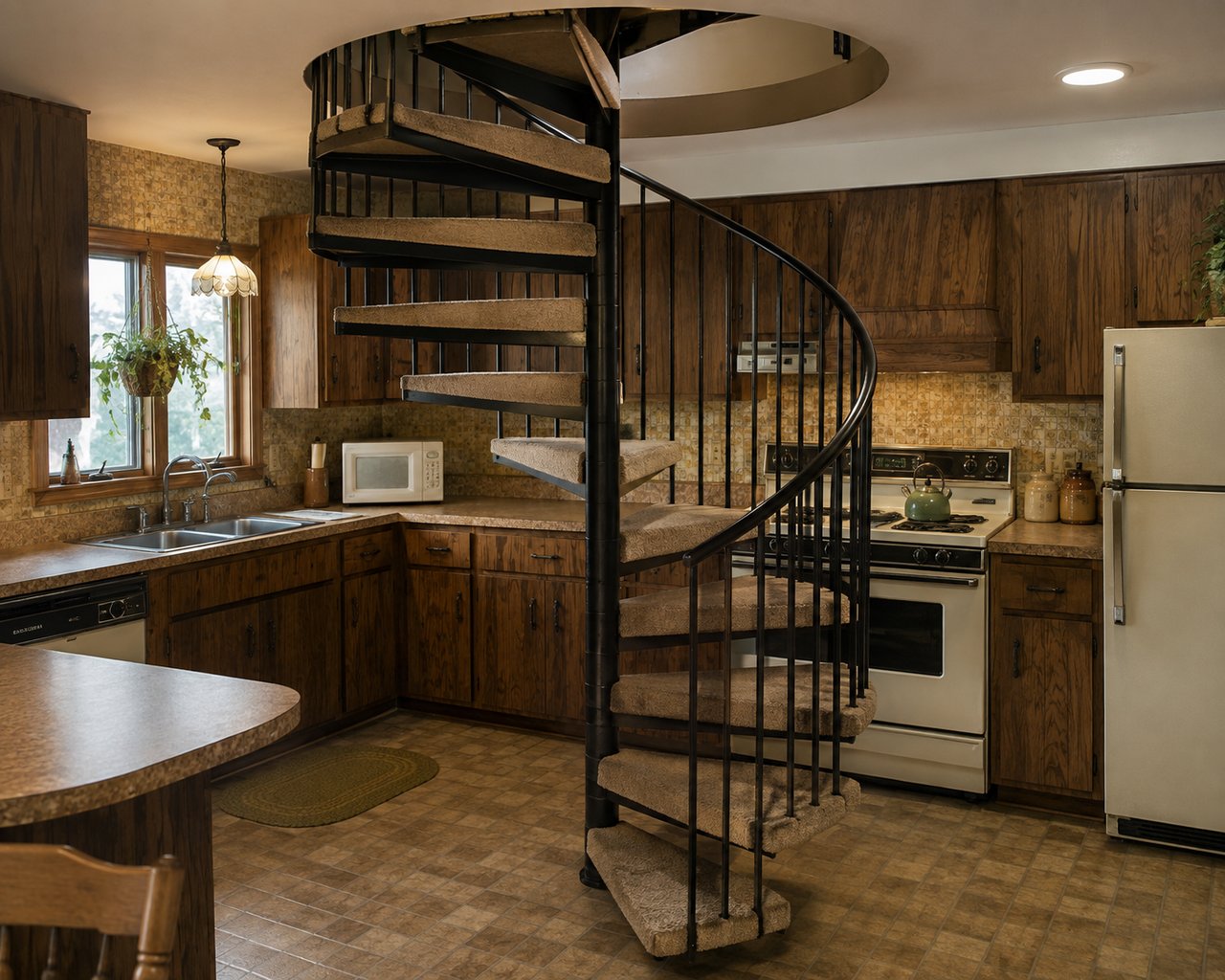
The only staircase in the house is a spiral staircase smack dab in the middle of a very small kitchen - and it leads to the primary bedroom. Have you ever tried to get a mattress up a spiral staircase? Yikes.
My recommendation: move the primary bedroom to the main floor and turn the upstairs into a bunk room. Whenever possible, having a primary bedroom option on the main floor also makes a home work for a much broader range of buyers. Sometimes you don't need to move the staircase. You move the bedroom.
Elephant #2: No Air Conditioning in the Bedrooms
Only half of the house is air conditioned. Unfortunately, it's the wrong half. None of the main floor bedrooms have air conditioning. I can do almost anything in the heat except sleep. Buyers notice things like this. More importantly, they start calculating the cost to fix it.
Again, this isn't something staging solves.
Elephant #3: The Walls Look Cracked
The house had recently been painted, but the drywall tape was peeling. I know it's drywall tape. But a buyer walking through the house doesn't necessarily know that. They see what looks like a crack running down the wall and start wondering what's wrong with the house. The painters should have repaired it before painting. It's a relatively simple repair that suddenly looks like a potentially expensive problem because nobody fixed it before going to market.
Now I'm Going to Say Something Controversial
PAINT THE WOOD WINDOW FRAMES.
If they're glossy yellow pine or oak, please. Paint them. They burn my eyes.
Before the natural-wood people come after me, there is absolutely a place for beautiful wood. Wide planks in a mid-century modern house? Gorgeous. A meaningful paneled wall? Absolutely. Rich wood kitchen cabinetry? Yes. A kitschy A-frame log cabin in the woods? Keep every inch of it. But if you walk into your house and it looks like the inside of a coffin, think twice.
Not all wood is architectural character. Sometimes it's just dated.
And Then There's the Price
This is where things really went off the rails. The house was originally priced at roughly double what the comparable sales supported. Double. Meanwhile, the only staircase in the house was still a spiral staircase in the middle of the kitchen.
Pricing isn't aspirational. And just because your neighbor has their house listed for $2 million-plus doesn't mean their house is worth $2 million-plus. Look at what has SOLD. Is the square footage similar? Are the kitchens and bathrooms renovated? Are the bedrooms en suite? Does one property have a pool, lake access, a view, better land, central air or other features that materially affect value? The market isn't what sellers are asking. The market is what buyers are actually paying.
How to Get It Right
If all of this sounds overwhelming, imagine how it feels when your house has been sitting on the market for 24 months. You have one chance to make a good first impression when you go to market.
Before you hire an agent, do some homework.
• Look at the homes they have actually sold. What level of property do they represent? Does your house fit within their portfolio?
• Look at their active listings. Do they have a lot of properties that haven't sold? Listings aren't the same thing as sales.
• Ask how they arrived at the price. You should see relevant closed comparables, not simply other sellers' asking prices.
• Will they tell you what you don't want to hear? You aren't hiring someone to compliment your house. You're hiring someone to sell it.
• Can they identify the elephants in the room? Focus on the meaningful obstacles before getting lost in the minutiae.
• Do they have resources to get the property ready? Painters, contractors, landscapers, cleaners and stagers should be available when you need them.
• Do they use professional photography? This should not be optional.
• Do they install professional signage where appropriate? Your neighbors know people who want to live near them.
• Do they market their listings on social media? Yes, it matters. It's an important way to make buyers and the surrounding community aware that your property is for sale.
• Do they have a professional website? Look at how their current listings are presented.
• Read their reviews. Look for what clients say about communication, strategy, negotiation and follow-through.
• What is their level of experience? Complicated properties require judgment.
• Who actually shows your house? Is it the agent you hired, or will buyers routinely be handed off to less-experienced members of a team?
And perhaps most importantly:
When your agent walks through your house, are they focused on the minutiae - or do they see the elephant standing in the middle of the kitchen Sometimes the answer is new throw pillows. Sometimes it's paint. Sometimes it's air conditioning. And sometimes you move the bedroom.
You have one chance to make a good first impression when your property goes to market. Choose an agent who sees what buyers are going to see before the buyers ever walk through the door.
If your house has been sitting on the market and you don't know why, sometimes a fresh set of eyes is exactly what it needed.